






Course Summary
The ISO 14001:2026 Environmental Management Systems (EMS) Awareness Course provides
participants with an understanding of the fundamental principles and requirements of an
Environmental Management Systems based on ISO 14001:2026. The course introduces participants
to environmental management, organizational responsibilities, environmental aspects and impacts,
compliance obligations, environmental objectives, operational controls, and continual improvement.
The course is designed to create awareness of how employees can contribute to the effective
implementation and continual improvement of an organization’s Environmental Management
Systems.
Who Should Attend?
This course is suitable for:
• Employees at all levels
• Environmental Officers and Coordinators
• SHEQ and HSE personnel
• Quality and Compliance personnel
• Supervisors and Team Leaders
• Operations and Production personnel
• Management and Department Heads
• Personnel involved in environmental activities
• Employees working within an organization implementing ISO 14001
• Anyone seeking an introduction to Environmental Management Systems
Course Objectives
Upon completion of the course, participants will be able to:
• Understand the purpose and benefits of ISO 14001:2026.
• Explain the basic principles of an Environmental Management Systems.
• Understand the structure and key requirements of ISO 14001:2026.
• Recognize the environmental aspects and impacts associated with organizational activities.
• Understand the importance of environmental legal and compliance obligations.
• Explain the roles and responsibilities of employees within an EMS.
• Understand environmental objectives and continual improvement.
• Recognize the importance of environmental performance monitoring.
• Understand how individual activities can affect the organization’s environmental performance.
• Contribute effectively to the implementation and maintenance of an EMS
Course Modules
• Who is ISO
• What is an ISO Standard
• What is ISO 14001?
• Purpose of ISO 14001:2026
• Key principles of environmental management systems
• Structure of the standard
• Benefits of ISO 14001 certification
• Relationship between ISO 14001 and other management systems.
• An overview of the main requirements covering:
• Context of the Organization
• Leadership
• Planning
• Support
• Operation
• Performance Evaluation
• Improvement
• Certification Process
Benefits
Participants will gain the ability to:
• Develop greater awareness of environmental responsibilities.
• Understand their role in supporting the organization’s EMS.
• Recognize and help reduce environmental impacts.
• Support compliance with environmental requirements.
• Improve environmental performance and resource efficiency.
• Promote responsible use of energy, water, materials, and other resources.
• Reduce waste and prevent pollution.
• Support the organization’s environmental objectives.
• Contribute to continual improvement.
• Improve awareness of environmental risks and opportunities.
Certification
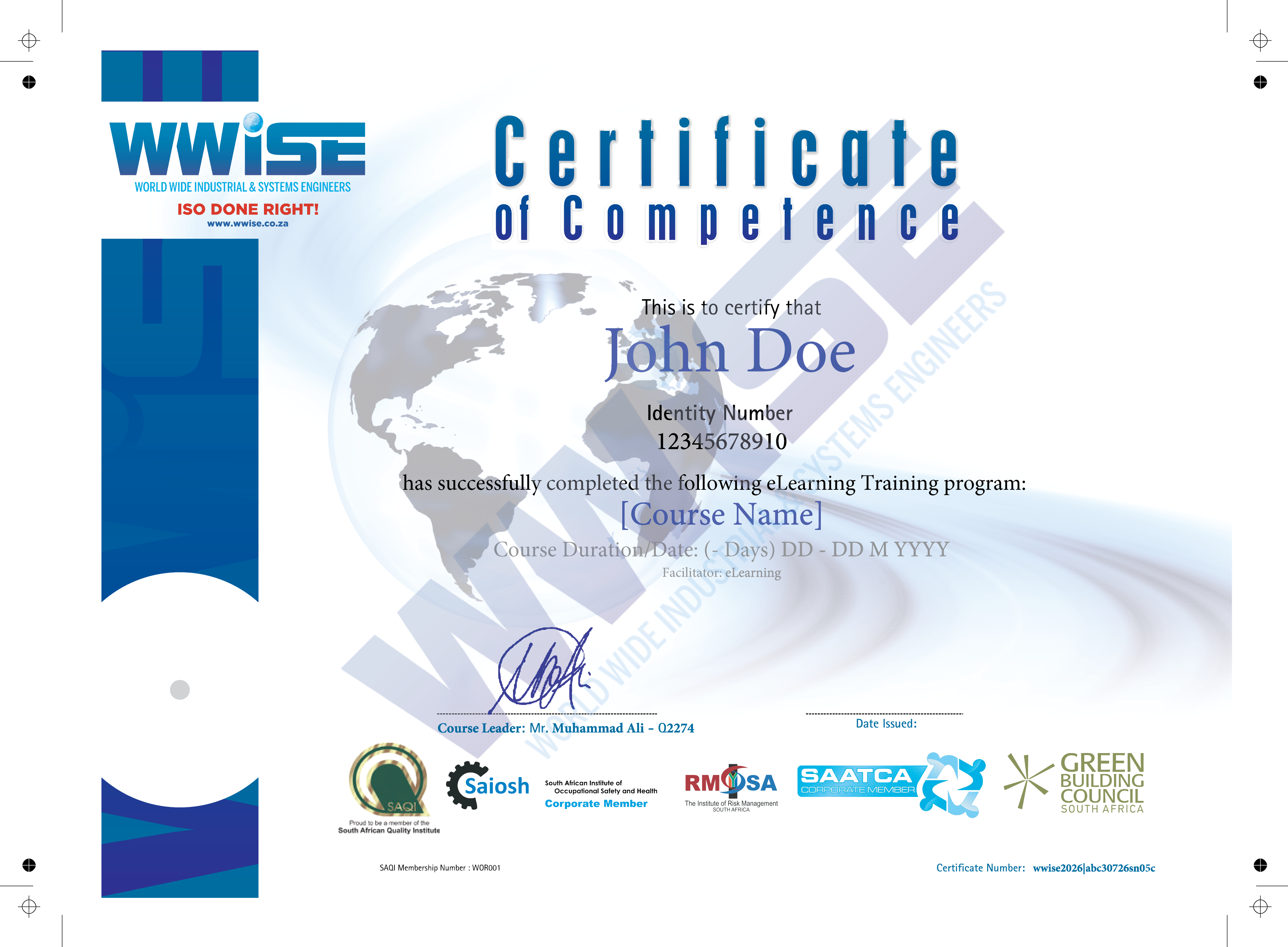
• Certificate of Competence (achievement of 60% pass mark)
• Certificate of Attendance (Non- achievement of 60% pass mark)
Assessment
• There will be an assessment at the end of the course.
• Delegates have to complete the assessment with a minimum score of 70% to receive a certificate of competence.
• Delegates who score between 50% and 69% will get a second attempt at the assessment.
• Delegates who score lower than 50% or fail the second attempt, will need to repurchase the course.
• Delegates will receive an attendance certificate regardless of a pass or fail.
Learning Outcomes
- ISO 14001:2026 Environmental Management Awareness Competent.
- Develop greater awareness of environmental responsibilities.
- Understand their role in supporting the organization's EMS.
- Recognize and help reduce environmental impacts.
- Support compliance with environmental requirements.
- Improve environmental performance and resource efficiency.
- Promote responsible use of energy, water, materials, and other resources.
- Reduce waste and prevent pollution.
- Support the organization's environmental objectives.
- Contribute to continual improvement.
- Improve awareness of environmental risks and opportunities.

CERTIFICATE PREVIEW