






Course Summary
This course is designed to assist organizations in transitioning their Environmental Management Systems (EMS) to the published ISO 14001:2026 standard. Building on ISO 14001:2015, the updated version is expected to place greater emphasis on climate change, sustainability, lifecycle thinking, environmental performance, digitalization, and organizational resilience. The course provides practical guidance on understanding expected changes, interpreting new requirements, and aligning environmental strategies with business objectives.
Participants will learn how to conduct gap analyses, enhance environmental performance, manage
environmental risks and opportunities, and prepare for successful certification under the revised
standard.
Who Should Attend?
This course is designed for individuals involved in
• Environmental managers and EMS coordinators
• SHEQ managers and practitioners
• Internal and lead auditors
• Compliance and sustainability professionals
• Senior managers and executives
• Process owners and operational managers
• Consultants involved in ISO implementation
Course Objectives
By the end of this course, participants will be able to:
• Understand the structure and published requirements of ISO 14001:2026
• Identify key differences between ISO 14001:2015 and ISO 14001:2026
• Interpret updated EMS clauses and requirements
• Integrate climate change and sustainability into EMS
• Apply lifecycle thinking and environmental risk management
• Conduct environmental aspect and impact assessments
• Perform a gap analysis and develop a transition plan
• Improve environmental performance and compliance
• Prepare for EMS audits and certification
Course Modules
Module 1: Introduction to ISO 14001:2026
• Overview of Environmental Management Systems (EMS)
• Evolution from ISO 14001:2015 to 2026
• Environmental management principles
Module 2: Key Changes and Emerging Trends
• Climate change considerations
• Biodiversity & Ecosystems
• Sustainability and ESG alignment
• Digitalization in EMS
Module 3: Context of the Organization & Stakeholders
• Internal and external environmental issues
• Needs and expectations of interested parties
• Defining EMS scope
Module 4: Leadership and Environmental Policy
• Leadership commitment and accountability
• Environmental policy and strategic direction
• Roles, responsibilities, and authorities
Module 5: Environmental Aspects, Impacts, and Risk Management
• Identifying environmental aspects and impacts
• Risk and opportunity assessment
• Lifecycle perspective
Module 6: Compliance Obligations
• Legal and regulatory requirements
• Compliance evaluation
• Managing environmental obligations
Module 7: Operational Planning and Control
• Managing significant environmental aspects
• Supply chain and outsourced processes
• Emergency preparedness and response
Module 8: Performance Evaluation
• Monitoring and measurement
• Environmental performance indicators (KPIs)
• Internal audits and management review
Module 9: Improvement and Sustainability
• Nonconformities and corrective actions
• Continual improvement
• Driving sustainability initiatives
Module 10: Gap Analysis and Transition Planning
• Conducting a gap analysis
• Identifying improvement areas
• Developing a transition roadmap
Benefits
Participants and organizations will benefit by:
• Smooth transition to ISO 14001:2026
• Improved environmental performance and compliance
• Enhanced sustainability and climate risk management
• Reduced environmental impact and operational risks
• Increased stakeholder confidence and reputation
• Better integration of environmental considerations into business strategy
• Strengthened audit readiness and continual improvement
Certification
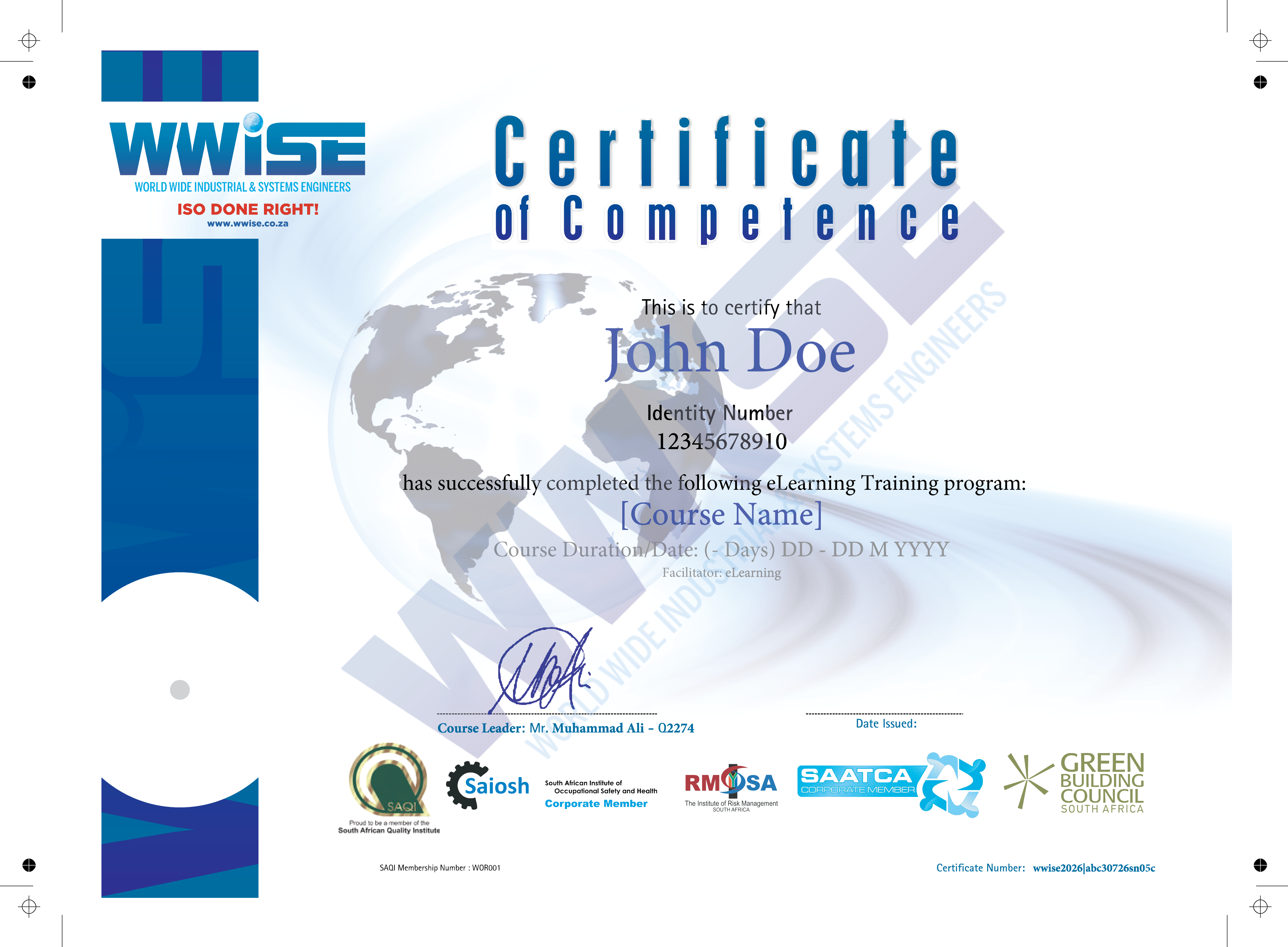
Delegates will receive a Certificate of:
• Attendance or
• Competency
Assessment
• There will be an assessment at the end of the course.
• Delegates have to complete the assessment with a minimum score of 70% to receive a certificate of competence.
• Delegates who score between 50% and 69% will get a second attempt at the assessment.
• Delegates who score lower than 50% or fail the second attempt, will need to repurchase the course.
• Delegates will receive an attendance certificate regardless of a pass or fail.
Learning Outcomes
- Demonstrate understanding of the key changes between the ISO 14001:2015 and ISO 14001:2026 Standards for effective transition.

CERTIFICATE PREVIEW