






Course Summary

This course provides delegates with an understanding of the ISO 19011:2026 guidelines for auditing management systems. It covers audit principles, audit programme management, audit planning and execution, reporting, follow-up activities, and auditor competence. Delegates will develop the knowledge and practical skills required to conduct effective, objective and evidence-based audits that support compliance, risk management and continual improvement.
Who Should Attend?
• Internal and external auditors.
• Quality, Environmental, Health and Safety (EHS) managers and officers.
• Management representatives and compliance officers.
• Audit programme managers and audit team leaders.
• Consultants involved in management system implementation and auditing.
• Professionals responsible for maintaining and improving ISO-certified management systems.
Course Objectives
By the end of the course, the learner will be able to:
- Understand the scope, terminology and principles of ISO 19011:2026.
- Distinguish between first-, second- and third-party audits.
- Establish, implement, monitor and improve an audit programme.
- Define audit objectives, scope and criteria.
- Plan and conduct audits using appropriate audit methods and techniques.
- Collect and evaluate objective audit evidence.
- Identify, document and report audit findings and nonconformities.
- Manage audit conclusions, corrective actions and follow-up activities.
- Understand auditor competence, evaluation and continual professional development.
Course Modules
Module 1: Introduction to ISO 19011:2026
- Overview and purpose of the guidelines.
- Key terminology and definitions.
- Types of audits and their applications.
Module 2: Principles of Auditing
- Core principles of effective auditing.
- Auditor integrity, confidentiality and independence.
- Evidence-based and risk-based approaches.
Module 3: Managing an Audit Programme
- Establishing audit programme objectives and scope.
- Managing audit resources and responsibilities.
- Monitoring and improving audit programme effectiveness.
Module 4: Planning and Preparing for an Audit
- Defining audit objectives, scope and criteria.
- Selecting audit methods and team members.
- Preparing audit plans and checklists.
Module 5: Conducting an Audit
- Reviewing documented information.
- Conducting interviews and observations.
- Collecting, verifying and evaluating audit evidence.
- Recording audit observations and findings.
Module 6: Audit Findings and Reporting
- Identifying conformity and nonconformity.
- Documenting objective audit findings.
- Preparing audit reports and communicating conclusions.
Module 7: Audit Follow-Up and Corrective Actions
- Addressing audit findings and nonconformities.
- Identifying root causes and developing action plans.
- Verifying corrective action implementation and effectiveness.
Module 8: Auditor Competence and Evaluation
- Identifying required auditor knowledge and skills.
- Evaluating auditor competence and performance.
- Maintaining competence through professional development.
Module 9: Practical Auditing and Course Assessment
- Applying auditing techniques to practical scenarios.
- Developing audit questions and checklists.
- Evaluating evidence and preparing audit reports.
- Reviewing key concepts and completing the course assessment.
Benefits
- Develop practical skills to plan, conduct, report and follow up on management system audits.
- Apply a consistent, evidence-based and risk-based approach to auditing.
- Improve the identification of nonconformities, risks and opportunities for improvement.
- Support compliance with applicable management system, legal and regulatory requirements.
- Strengthen audit programme effectiveness and auditor competence.
- Promote continual improvement and enhance management system performance.
Certification
- Certificate of Attendance
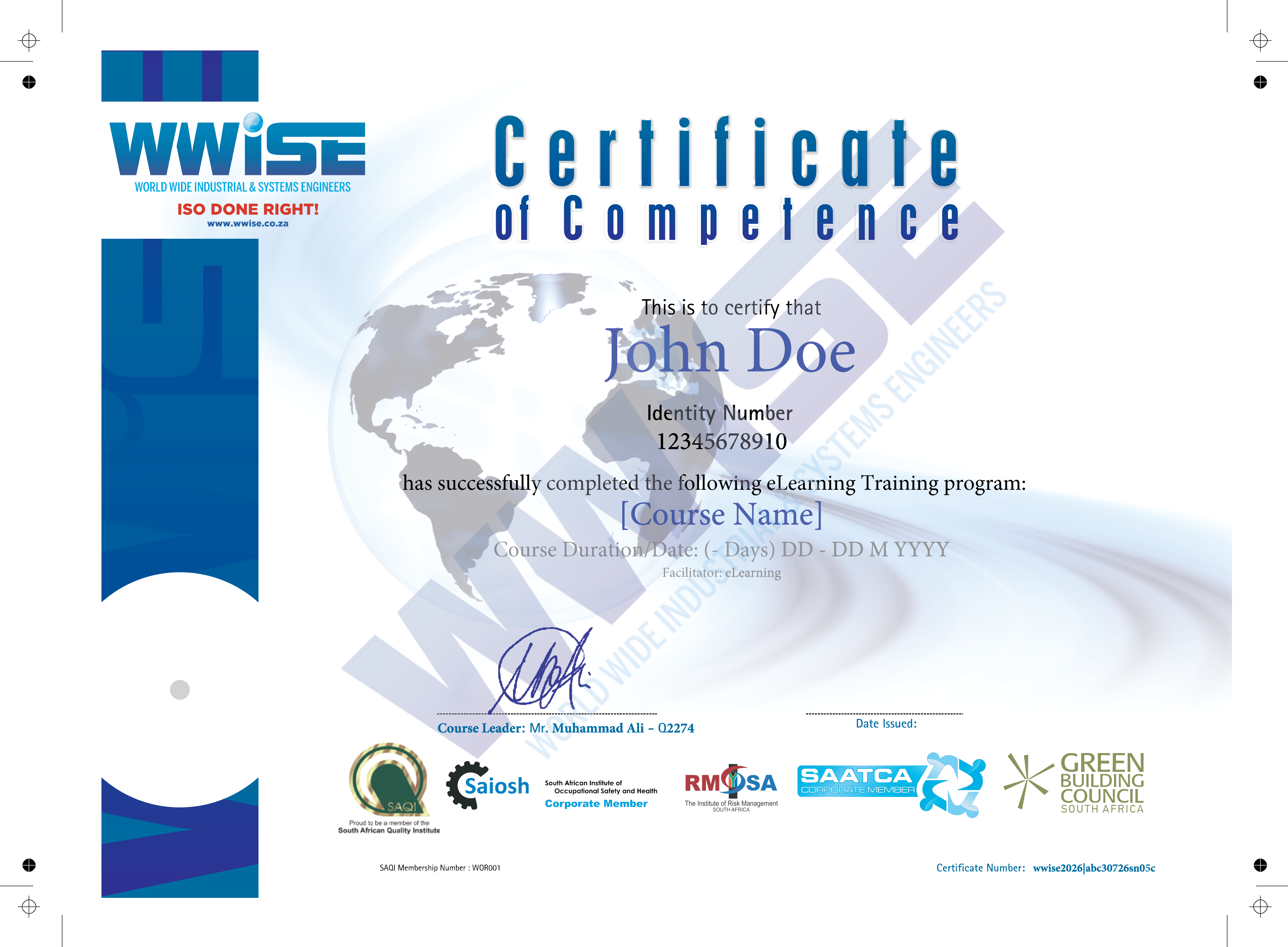
- Certificate of Competence
Assessment
- Delegates must complete the assessment with a minimum score of 60% to receive a certificate of competence.
- Delegates who score between 50% and 59% will receive a second attempt at the assessment.
- Delegates who score below 50% or fail the second attempt will need to repurchase the course.
- Delegates will receive an attendance certificate regardless of whether they pass or fail.
Learning Outcomes
- Develop practical skills to plan, conduct, report and follow up on management system audits.
- Apply a consistent, evidence-based and risk-based approach to auditing.
- Improve the identification of nonconformities, risks and opportunities for improvement.
- Support compliance with applicable management system, legal and regulatory requirements.
- Strengthen audit programme effectiveness and auditor competence.
- Promote continual improvement and enhance management system performance.

CERTIFICATE PREVIEW