






Course Summary

This course is designed to support organizations in transitioning their Quality Management Systems (QMS) to the anticipated ISO 9001:2026 standard. Building on ISO 9001:2015, the updated version is expected to place greater emphasis on digital transformation, risk-based thinking, organizational resilience, sustainability, and stakeholder value. This course provides participants with insights into expected changes, interpretation of new requirements, and practical guidance on implementing an effective and future-ready QMS.
Who Should Attend?
This course is designed for individuals involved in
- Quality managers and QMS coordinators
- Management representatives
- Internal and lead auditors
- Senior managers and executives
- Process owners and department heads
- Compliance and risk management professionals
- Consultants and ISO implementation specialists
Course Objectives
By the end of this course, participants will be able to:
- Understand the structure and anticipated requirements of ISO 9001:2026
- Identify key differences between ISO 9001:2015 and ISO 9001:2026
- Interpret new and updated clauses
- Apply advanced risk-based thinking and opportunity management
- Integrate digital tools into QMS processes
- Align QMS with organizational strategy and sustainability goals
- Conduct a comprehensive gap analysis
- Develop and implement a transition plan
- Prepare for internal and external audits under the revised standard
Course Modules
Module 1: Introduction to ISO 9001:2026
- Overview of Quality Management Systems (QMS)
- Evolution from ISO 9001:2015 to 2026
- Key quality management principles
Module 2: Key Changes and New Concepts
- Updated High-Level Structure (HLS)
- Emerging trends (digitalization, sustainability, resilience)
- Expanded focus on stakeholder value
Module 3: Context of the Organization & Stakeholder Needs
- Internal and external issues
- Interested parties and expectations
- Strategic alignment of QMS
Module 4: Leadership and Governance
- Leadership accountability
- Quality culture and ethics
- Integration with business strategy
Module 5: Risk-Based Thinking and Opportunity Management
- Advanced risk management approaches
- Opportunity identification
- Business continuity and resilience
Module 6: Digital Transformation in QMS
- Use of digital tools and data analytics
- Automation of processes
- Documented information and digital systems
Module 7: Operational Planning and Control
- Process approach and optimization
- Supply chain and external provider management
- Managing change
Module 8: Performance Evaluation
- KPIs and performance metrics
- Internal audits and management reviews
- Data-driven decision-making
Module 9: Improvement and Innovation
- Nonconformities and corrective actions
- Continuous improvement methodologies
- Innovation in quality management
Module 10: Gap Analysis and Transition Planning
- Conducting a gap analysis
- Identifying areas for improvement
- Developing a transition roadmap
Module 11: Implementation and Audit Readiness
- Updating documentation and processes
- Training and awareness
- Preparing for certification audits
Benefits
Participants and organizations will benefit by:
- Smooth transition to ISO 9001:2026
- Improved organizational efficiency and adaptability
- Enhanced risk management and resilience
- Better integration of digital systems into quality processes
- Increased customer satisfaction and stakeholder confidence
- Strengthened compliance and audit readiness
- Future-proofed quality management systems
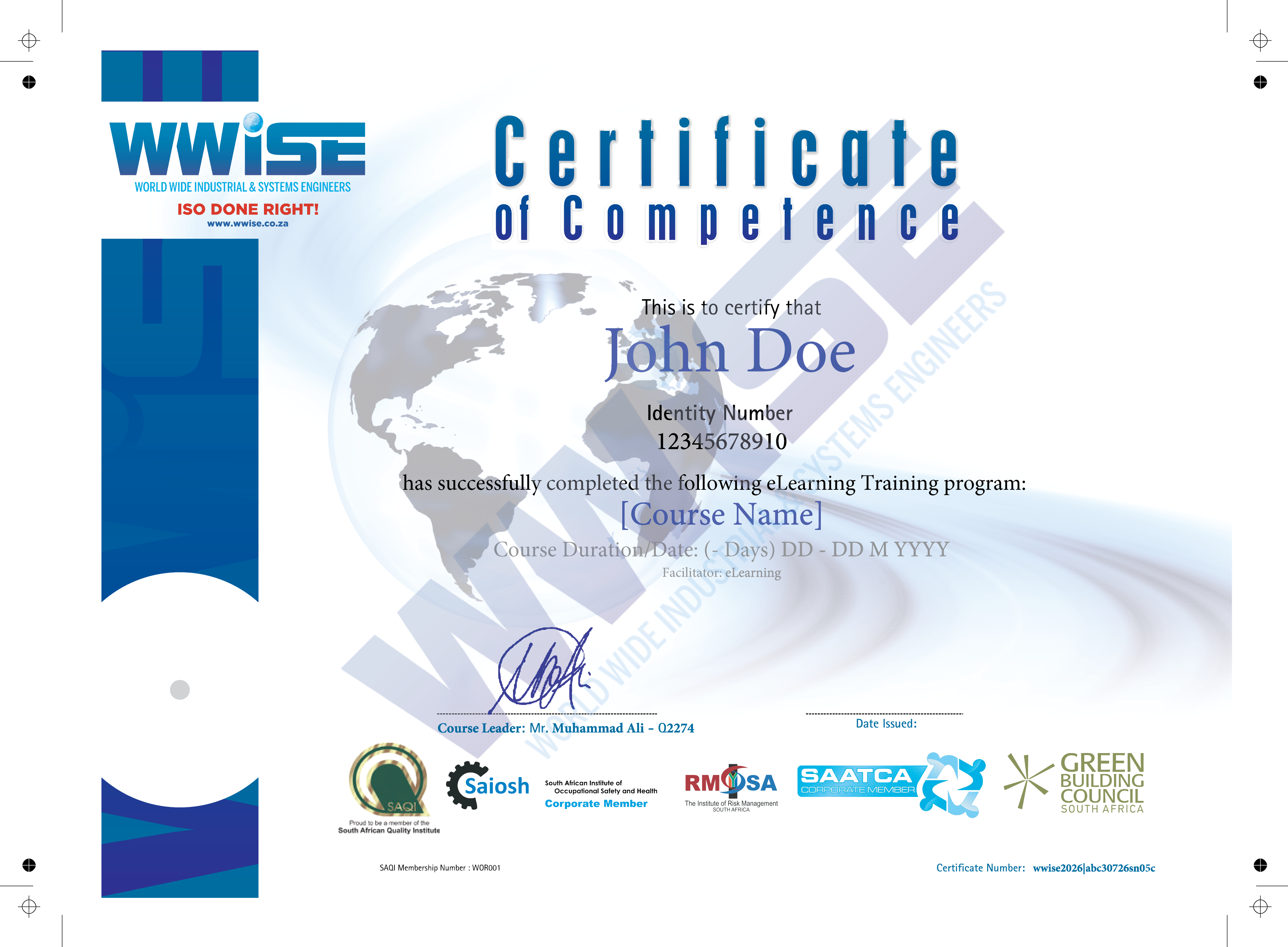
Certification
Delegates will receive a Certificate of:
- Attendance, or
- Competency
Assessment
- Pre- and Post-course Assessments
Learning Outcomes
- Smooth transition to ISO 9001:2026
- Improved organizational efficiency and adaptability
- Enhanced risk management and resilience
- Better integration of digital systems into quality processes
- Increased customer satisfaction and stakeholder confidence
- Strengthened compliance and audit readiness
- Future-proofed quality management systems

CERTIFICATE PREVIEW