

Course Summary
The ISO 14001:2026 Environmental Management Systems (EMS) Implementation Course provides participants with the knowledge and practical skills required to establish, implement, maintain, and continually improve an Environmental Management System in accordance with ISO 14001:2026. The course covers the requirements of the standard, implementation methodologies, environmental planning, legal compliance, risk and opportunity management, environmental performance monitoring, and continual improvement.
Participants will learn how to integrate environmental management into business operations, reduce environmental impacts, meet legal and regulatory obligations, improve sustainability performance, and prepare their organizations for certification.
Who Should Attend?
This course is designed for individuals involved in
- Environmental Managers and Officers
- EMS Coordinators
- SHEQ Managers and Practitioners
- Sustainability Professionals
- Compliance Officers
- Quality and Integrated Management System Professionals
- Consultants implementing ISO Management Systems
- Internal Auditors
- Operations and Production Managers
- Individuals responsible for environmental compliance
Anyone involved in developing or maintaining an EMS
Course Objectives
By the end of this course, participants will be able to:
- Understand the purpose and benefits of ISO 14001:2026.
- Interpret the requirements of ISO 14001:2026.
- Plan and implement an effective Environmental Management System.
- Identify environmental aspects and evaluate environmental impacts.
- Determine environmental risks and opportunities.
- Understand environmental legal and compliance obligations.
- Develop environmental objectives and implementation programmes.
- Establish documented information required by the EMS.
- Monitor environmental performance using appropriate indicators.
- Conduct management reviews and continual improvement activities.
Prepare an organization for third-party certification.
Course Modules
Module 1: Introduction to Environmental Management Systems
- Environmental management principles
- Sustainability concepts
- Overview of ISO 14001:2026
- Annex SL High-Level Structure
- Benefits of implementing an EMS
- EMS lifecycle
Module 2: Understanding ISO 14001:2026 Requirements
Clause 4 – Context of the Organization
- Understanding the organization
- Interested parties
- Scope of the EMS
- Environmental management system processes
Clause 5 – Leadership
- Leadership commitment
- Environmental policy
- Organizational roles and responsibilities
- Accountability
Clause 6 – Planning
- Risks and opportunities
- Environmental aspects
- Environmental impacts
- Compliance obligations
- Environmental objectives
- Planning actions
Module 3: EMS Implementation
Clause 7 – Support
- Resources
- Competence
- Awareness
- Communication
- Documented information
Developing:
- EMS Manual
- Environmental Procedures
- Work Instructions
- Records
- Environmental Documentation
Module 4: Operational Planning and Control
Clause 8
- Operational planning
- Process controls
- Life-cycle perspective
- Procurement controls
- Outsourced processes
- Emergency preparedness
- Emergency response planning
Module 5: Environmental Performance Evaluation
Clause 9
- Monitoring and measurement
- Environmental performance indicators (KPIs)
- Compliance evaluation
- Internal audits
- Management reviews
- Reporting environmental performance
Module 6: Improvement
Clause 10
- Nonconformities
- Corrective actions
- Root cause analysis
- Continual improvement
- Environmental performance enhancement
Module 7: Environmental Risk Management
- Identifying environmental hazards
- Environmental risk assessment techniques
- Impact evaluation
- Control measures
- Environmental emergency planning
Module 8: Legal and Regulatory Compliance
- Environmental legislation
- Compliance obligations
- Regulatory monitoring
- Maintaining legal registers
- Demonstrating compliance
Module 9: Practical EMS Implementation Workshop
- Participants will complete practical implementation activities, including:
- Conducting a gap analysis
- Identifying environmental aspects and impacts
- Developing an environmental policy
- Establishing environmental objectives
- Creating an implementation plan
- Developing EMS documentation
Preparing an implementation roadmap
Module 10: Preparing for Certification
- Certification process
- Stage 1 Audit
- Stage 2 Audit
- Certification requirements
- Addressing nonconformities
- Maintaining certification
- Continual improvement strategies
Benefits
Participants and organizations will benefit by:
- Improve environmental performance.
- Reduce environmental risks and impacts.
- Ensure compliance with environmental legislation.
- Enhance resource efficiency and reduce waste.
- Improve energy and resource conservation.
- Strengthen organizational sustainability initiatives.
- Increase stakeholder confidence.
- Support continual improvement of environmental performance.
- Prepare organizations for successful ISO 14001 certification.
Contribute to corporate environmental responsibility and sustainable development.
Certification
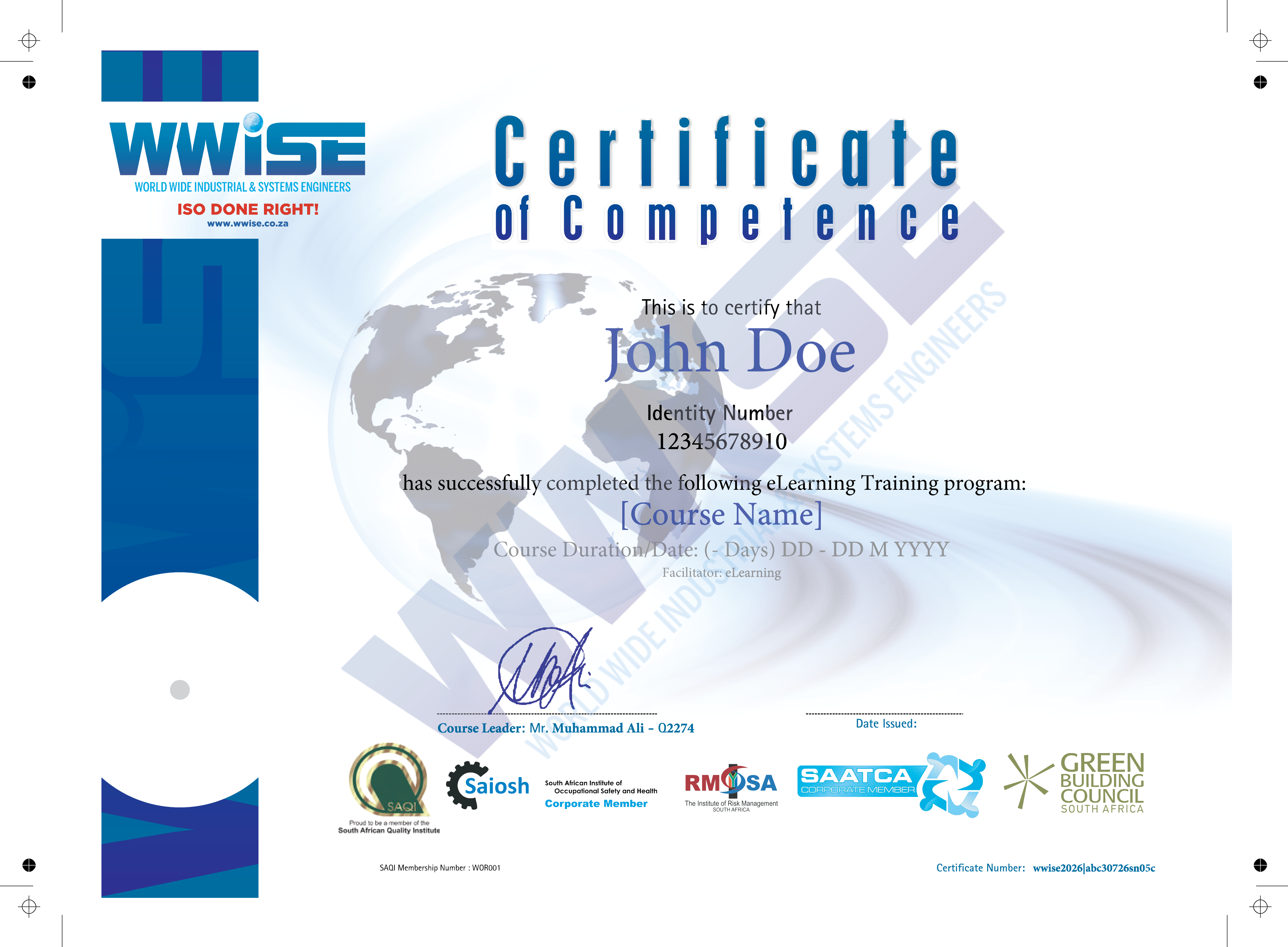
Delegates will receive a Certificate of:
- Attendance or
- Competency
Assessment
There will be an assessment at the end of the course.
- Delegates have to complete the assessment with a minimum score of 60% to receive a Certificate of Competence.
- Delegates who score between 50% and 59% will get a second attempt at the assessment.
- If you fail the second attempt, will need to repurchase the course
Delegates will receive a Certificate of Attendance regardless of a pass or fail.
Learning Outcomes
- ISO 14001:2026 Environmental Management Implementation Competent

CERTIFICATE PREVIEW